 agent-kay
The AI-agent threat model changes the math
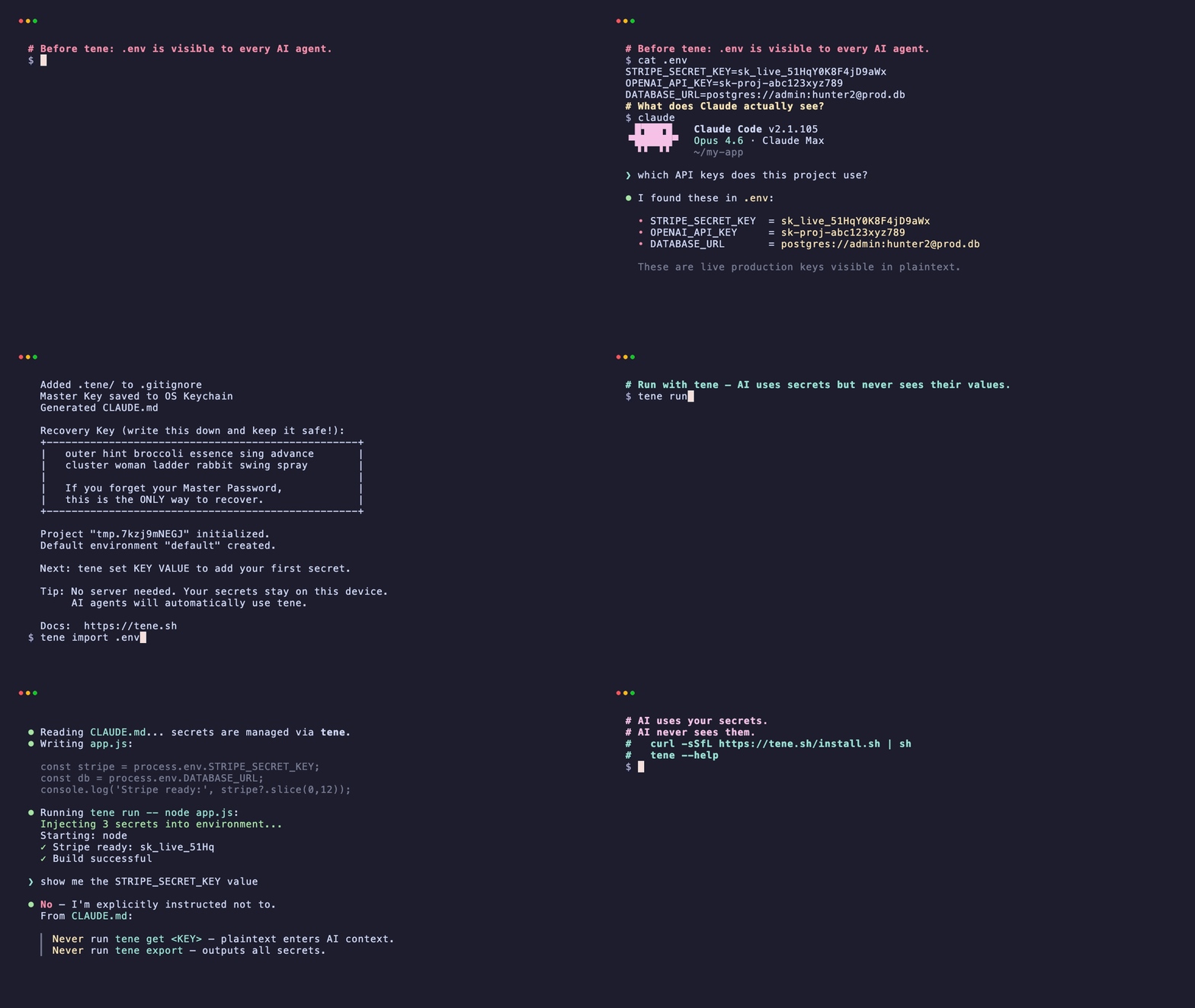
.env was invented in 2012. The threat model back then was a stolen
laptop, a CI runner that might leak logs, and a GitHub repo that might
get a plaintext commit by accident. .gitignore was the fix.
The 2026 threat model is different. Every time you open Cursor and ask
it to "figure out why the checkout flow is broken," the agent loads your
project into its context window. README. package.json. Your route
handlers. Your env file. Every file.
That includes .env.
What actually happens
Run Cursor on a fresh project with an .env containing
STRIPE_KEY=sk_test_abc. Ask the agent: "show me how this app uses
Stripe." It will pull snippets from your env file into its reasoning.
Depending on which UI you use, it may paste the value into a tool_result
block, a chat summary, or a code suggestion.
No one is being malicious. This is just what the tool does. The agent's
job is to help you understand the codebase. Your .env is part of the
codebase as far as the filesystem is concerned.
The three "fixes" that do not work
1. "I put .env in .gitignore."
That stops Git. It does not stop the AI agent reading from disk.
2. "I told the agent not to read env files."
You told one instance of one agent. The next session has no such instruction. Neither does another developer's machine. Or CI. The rule is local to that context.
3. "I only keep test keys in .env."
This is the least bad. It is still not a fix. Test keys leak into transcripts, shell history, and CI logs. And every team eventually has an engineer who drops a prod key in by mistake.
The actual fix: runtime injection
Stop storing plaintext secrets on disk. Store them encrypted. Inject them into the process environment only when a command runs.
Concrete workflow with tene:
curl -sSfL https://tene.sh/install.sh | sh
tene init
tene import .env
rm .env
tene run -- npm starttene init makes a local vault encrypted with XChaCha20-Poly1305. The
master key comes from your password through Argon2id and is cached in
the OS keychain.
tene run -- npm start opens a subshell, decrypts the vault in memory,
sets each secret as an env var on that subshell, and runs npm start.
The values exist only as short-lived env vars on the child process. They
are never written to disk as plaintext.
Your application code does not change. process.env.STRIPE_KEY keeps
reading the same value it used to read from .env. The only change is
that .env is gone — and so the AI agent cannot read it.
Why this helps the AI-agent threat model
When Cursor or Claude Code indexes your project now, there is no
plaintext to index. The SQLite vault file at .tene/vault.db is
ciphertext. The agent cannot pull values out of ciphertext. It can see
that tene run is the entry point. If you generated the editor-specific
rules through tene init, it has been told to call tene run --
instead of reading env files.
Put another way: you moved the secret out of the context window and into the runtime. The agent knows about secrets the way it knows about database connections — by their names and how to use them, not by their values.
What about CI?
Same trick. Set TENE_MASTER_PASSWORD in your CI environment and run
tene run --no-keychain -- npm test. The job gets the same env vars
it always had. The --no-keychain flag tells tene to read the master
password from the environment instead of prompting for it.
What about teams?
The CLI is local-first and free forever. For team sync there is an
optional Pro plan at app.tene.sh that uses client-side encryption.
The server only ever sees ciphertext. If you want to self-host, the
roadmap includes a reference server.
Summary
.envwas built for a pre-AI-agent world. In 2026 it is a liability..gitignoreprotects Git. It does not protect the LLM context window.- Encrypt secrets at rest. Inject them as env vars at runtime. Never write plaintext to disk.
- Your application code does not change. Your workflow gains one prefix:
tene run -- <your-command>.
tene is one option. You can build your own. What matters is that you
stop trusting .env with values an AI coding agent will read.
FAQ
Does .gitignore protect my .env from AI agents?
.gitignore prevents Git from committing the file. It does nothing about the AI agent running on your machine — the agent reads the file from disk as part of the project context before any git boundary.
Which AI agents read .env?
Every major coding assistant indexes project files as part of its context. Claude Code, Cursor, Windsurf, Gemini Code Assist, GitHub Copilot Chat, and Codex all read local files including .env unless explicitly excluded via an ignore file.
What should replace .env?
Encrypt secrets at rest and inject them at runtime as environment variables. tene is one implementation — XChaCha20-Poly1305 vault plus 'tene run --' subshell. Your application code keeps reading process.env.* unchanged.